
GetRaceReady is not a medical service. It does not provide medical advice, diagnosis or treatment and does not replace professional guidance. Speak to a GP or qualified clinician before starting or significantly increasing training, especially with an existing health condition, an injury, during pregnancy, or after a long lay-off. In an emergency call 999.
Open water
- Swim at a supervised venue with safety cover wherever possible. Never swim alone.
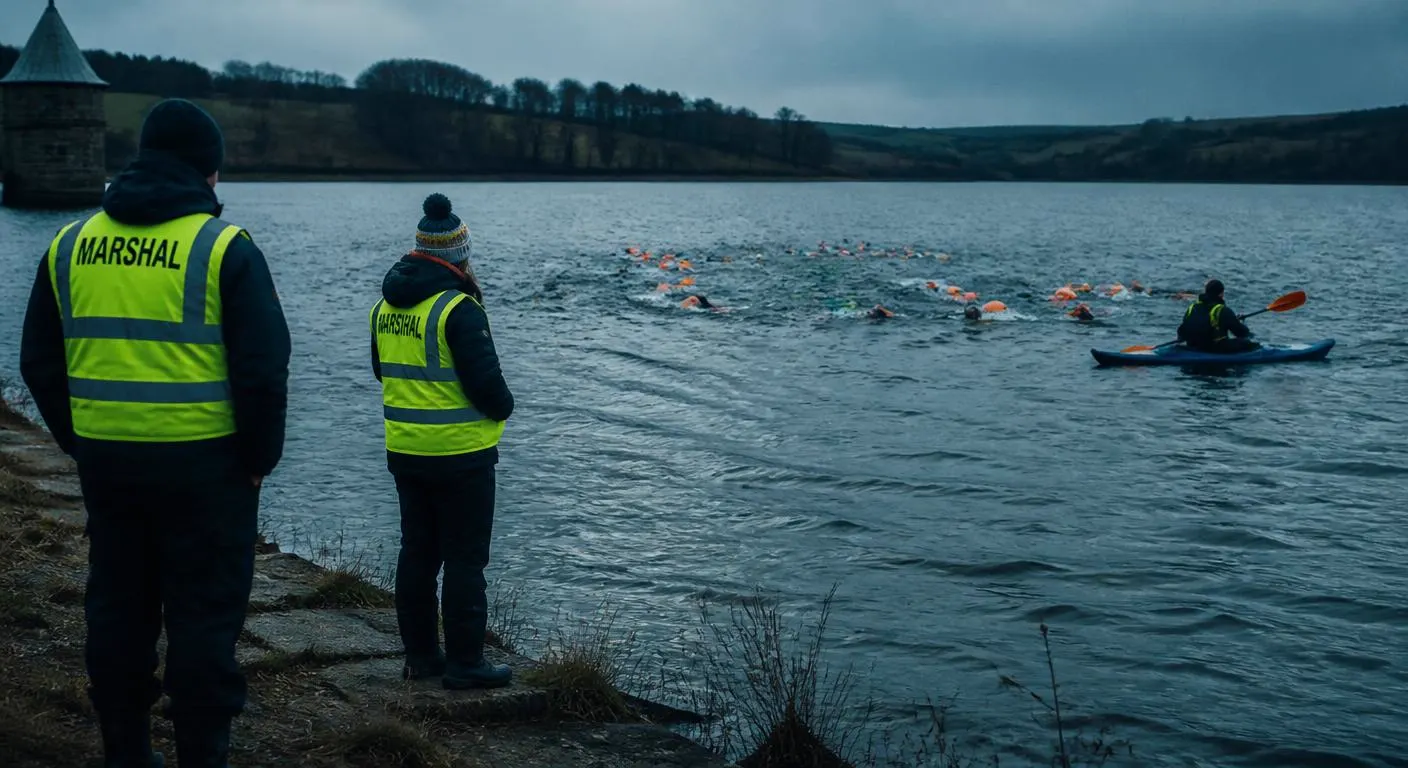
- Wear a brightly coloured cap and a tow float so boat users and marshals can see you.
- Acclimatise gradually to cold water: enter slowly, control your breathing, and get out if it does not settle.
- Check water quality and blue-green algae notices before you swim.
- Know your exit points and keep sessions shorter in cold conditions.
Road cycling
- Wear a helmet that meets a recognised safety standard and check your bike before every ride.
- Use front and rear lights in poor light, and reflective or high-visibility clothing on dark UK mornings.
- Follow the Highway Code, including its rules on road positioning and junctions.
- Carry a phone, identification and the means to fix a puncture, and tell someone your route.
- Move long or hard rides indoors when roads are icy, flooded or fogbound.
Weather and heat
- Adjust intensity in heat and humidity, and increase fluid and electrolyte intake.
- In cold and wet conditions, layer up, shorten exposure and change out of wet kit quickly.
- Reschedule rather than force a key session through a weather warning — the plan lets you move sessions.
Injury, illness and recovery
- Stop training and seek medical advice for chest pain, dizziness, fainting or an unexplained high heart rate.
- Do not train hard with a fever or a chest infection.
- Persistent pain that changes how you move is a reason to see a physiotherapist, not to push on.
- Record injuries and limitations in your assessment so the plan reflects them.